The World’s Gone Bonkers.
(Why What You Do Next Actually Matters.)
I
was in conversation with a friend recently — one of those long, late-night conversations where the world gets put to rights well into the small hours.
Of course, we went there.
The state of the world.
Sh*t show is putting it kindly.
The news.
The images.
The geopolitics.
The local politics.
The sense that everything feels sharper, louder, more unhinged than it used to.
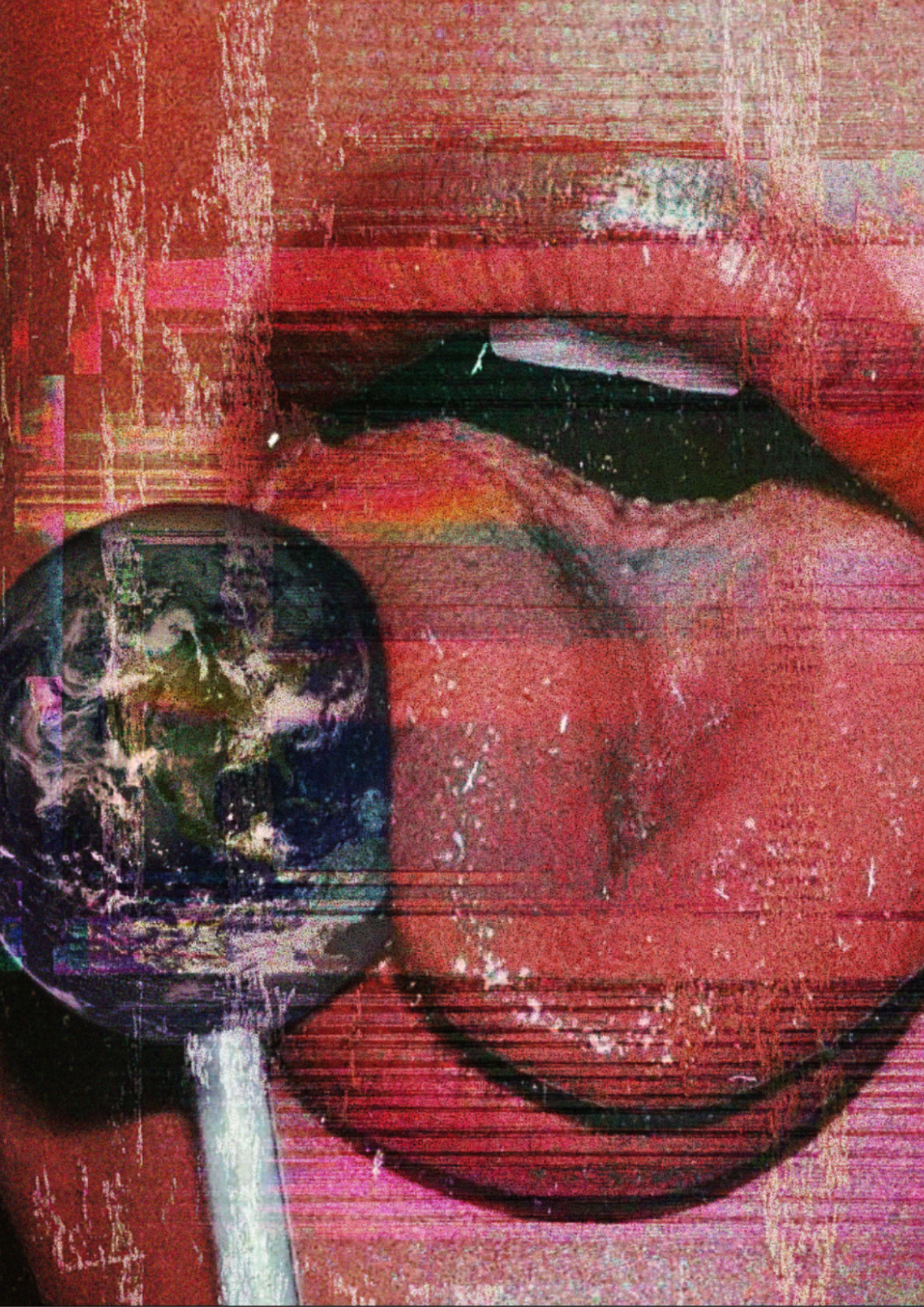
Cover art for the single Worst In Us by musician d3puu
She summed up her outlook with a familiar kind of despair:
“It just feels like there’s no integrity anymore. No justice. The hypocrisy is staggering. People don’t seem to care.”
I understood exactly what she meant.
And I also noticed something else.
Not the chaos itself (that’s a given) —
but how often it’s met with willful disengagement.
Not confusion.
Not lack of information.
A quiet refusal to look and take responsibility for what’s seen.
Because when two people look at the same world, they’re rarely seeing the same thing.
We are not all witnessing the same crisis
We may be watching the same events unfold on our screens.
But we are not receiving the same information.
There is always one element that grips us uniquely — a particular angle, emotion, or theme — and that preoccupation is rarely the same as the person standing next to us.
One person looks at a war and is preoccupied with injustice.
Another with imbalance.
Another with the absence of care or compassion.
Another feels overwhelmed by chaos, powerlessness, moral collapse.
And this matters:
What you notice first is not random.
What disturbs you most is diagnostic.
What you see “out there” is pointing you back here — to yourself
When someone tells me what’s hitting them hardest about what they’re witnessing, I listen closely.
Because that perception is precise.
The world isn’t handing us neutral information.
It’s acting like a mirror.
What you are most attuned to noticing is often the place where something in your own life is asking for attention.
Not in a blame-yourself way.
In a this-is-where-your-work-is way.
If you see injustice everywhere, ask:
Where in my life am I tolerating something that doesn’t feel just?
If you see imbalance:
Where am I over-giving, over-functioning, or under-receiving?
If you see a lack of love:
Where am I withholding — or not allowing myself to receive?
If you see polarisation, people talking past each other, no shared reality:
Where in my own life am I not in dialogue — with myself, or with someone close to me?
When someone says “there’s no integrity anymore,” the deeper question is often:
Where am I out of integrity with myself?
This isn’t mumbo or spiritual bypassing.
It’s responsibility at the correct scale.
Charity really does begin at home
A phrase that’s used so often it’s lost its weight: charity begins at home.
This is what it actually means.
You don’t stabilise the world by carrying it all in your nervous system.
You don’t do it by doom-scrolling, despairing, or collapsing under the weight of what you can’t control. That kind of attention dysregulates the system — and dysregulated systems don’t create clarity and can’t create change.
You stabilise the world by tending to the place where you do have agency.
Your integrity.
Your balance.
Your capacity to give and receive.
Your willingness to meet yourself honestly.
Because the chaos we’re witnessing globally isn’t separate from the chaos we tolerate privately.
It’s fractal.
Why this work matters now
The world hasn’t suddenly “gone wrong.”
What feels different is that what is incoherent is no longer being masked.
What we’re witnessing is exposure.
Systems — personal and collective — built on:
* disconnection
* unexamined patterns
* unmanaged nervous systems
* borrowed values
…are under pressure.
And pressure reveals structure.
This is why regulation, refinement, repatterning, expression, and integration are not luxuries.
They are civic acts.
A regulated nervous system doesn’t add fuel to chaos.
A refined signal doesn’t amplify noise.
A repatterned identity doesn’t recreate the same dynamics in a new arena.
Truthful expression reduces projection.
Integrated change stabilises the field.
This is how the world actually changes

Not all at once.
Not dramatically.
Not by convincing everyone else to see what you see.
But one nervous system at a time.
If more people took responsibility for:
* their own integrity
* their own imbalance
* their own capacity to love and be loved
* their own internal conflict
…the external world would have no structure to sustain the madness we’re witnessing.
The work is quiet.
Local.
Unsexy.
And it is the only kind that lasts.
A quiet bridge (not a pitch)
This is the work I do.
I’m not a super’shero fixing the world —
but one nervous system at a time, I help women stop leaking coherence into it.
The work of regulation.
Of refining signal.
Of repatterning identity.
Of learning how to express truth without projection.
Of integrating change so it actually holds.
If you feel the weight of the world right now, it may not be because you’re overwhelmed.
It may be because you’re sensitive to incoherence —
and ready to stop participating in it.
And if that’s true, the most responsible thing you can do next
is come back to yourself — and start there.
Enter to explore this work more deeply.
The small steps you take matter.
Quietly.
Exponentially.
⚡️🔥🚀♥️